

Waterproof vs. Heat Retention: Your Survival Guide for Latin America's Rainy Season Deliveries
Rainy season in Latin America? Don't let humidity ruin deliveries. Learn why BOTH waterproofing AND heat retention are essential for keeping tacos, arepas, and coffee perfect. Get the complete guide for food delivery businesses.
ENGLISH POSTS
R&D Team@Ningbo J & T
12/9/20254 min read
Introduction: The Double Threat of Latin America's Rainy Season
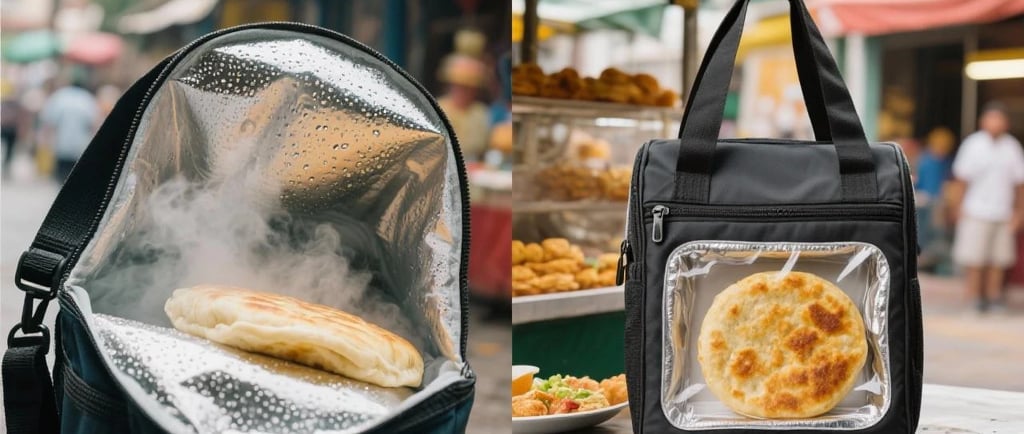
The rainy season across Latin America – from the torrential aguacerosof Mexico City to the persistent inviernoshowers of Bogotá – presents a dual challenge for food delivery: external moisture threatening to soak through and internal humidity sabotaging your carefully maintained temperatures. Many restaurant owners face a frustrating choice: a bag that keeps rain out but turns food soggy from trapped steam, or one that retains heat but becomes waterlogged in a downpour. The truth is, during the rainy season, you don't have to choose. This guide reveals how to survive – and thrive – by understanding and mastering both waterproofing and heat retention.
The Rainy Season Reality: More Than Just Getting Wet
The rainy season’s impact goes far beyond a soaked delivery driver. For your food, it creates a hostile environment:
High Ambient Humidity: Saturated air acts as a superhighway for heat transfer, pulling warmth from your food up to 30% faster than dry conditions.
Thermal Shock: Sudden temperature drops when moving from a warm kitchen into cool, rainy air can cause rapid heat loss.
Condensation Catastrophe: When warm, moist air from your food meets the cooler interior surface of a standard bag, it condenses. This "rain inside your bag" makes tacos soggy, arepas mushy, and packaging disintegrate.
Part 1: The Non-Negotiable - True Waterproofing for Motorcycle Delivery
For the vast majority of Latin American delivery drivers on motorcycles or bicycles, external waterproofing is a safety and quality essential.
The Enemy: Hydrostatic Pressure & Seam Leaks
Light rain is one thing, but a tropical downpour creates hydrostatic pressure– the force that drives water through microscopic holes in fabric and seams. Many "water-resistant" bags fail under this pressure.
The Solution: Military-Grade Sealing
True waterproofing requires:
Fabric: High-denier polyester with a polyurethane (PU) or thermoplastic polyurethane (TPU) coating. Look for a minimum 3000mm hydrostatic rating.
Seams: Heat-welded or taped seams are crucial. Stitched seams, even with a coating, will eventually wick water inside.
Zippers: Aquaguard® or similar waterproof zipper coils with a storm flap behind them are the industry standard for a reason.
The Test: A truly waterproof bag should withstand a direct hose test for 5+ minutes with no moisture inside.
Part 2: The Hidden Saboteur - Managing Internal Humidity & Condensation
Keeping rain out is only half the battle. The moisture insideyour bag – from the food itself – is often the bigger threat to quality.
The Science of Sogginess: Hot food releases moisture as steam. In a sealed, non-breathable bag, this humidity has nowhere to go. It condenses on the cooler inner liner, dripping back onto the food and packaging. This is why a purely waterproof bag can ruin a crispy taco.
The Solution: Vapor-Permeable, Waterproof Liners
The key is a liner that blocks liquid water from the outside but allows water vaporto escape from the inside. This is achieved with:
ePTFE Membranes: Advanced materials (like those in high-end outdoor gear) that are micro-porous. The pores are smaller than a water droplet (keeping rain out) but larger than a vapor molecule (letting steam escape).
Strategic Venting: Well-designed bags may include moisture-wicking liners or breathable zones in non-critical areas to manage humidity without compromising thermal insulation.
Part 3: The Balancing Act - Maintaining Heat in a Humid Environment
Humidity is the enemy of insulation. Wet insulation loses its ability to trap air – its primary insulating property.
Why Wet Insulation Fails: Most common insulation (like cheap foam or fiberfill) absorbs moisture. When wet, it collapses and conducts heat away rapidly. Your 4-hour保温 bag can become ineffective in under an hour if the insulation gets damp.
The Solution: Hydrophobic & Closed-Cell Insulation
For the rainy season, insulation must be:
Hydrophobic: Treated to repel water, not absorb it.
Closed-Cell: Like cross-linked polyethylene (IXPE) foam. Its structure consists of millions of sealed air pockets. Even if the outer layer is punctured, the interior cells remain dry and effective.
The Integrated System: In a high-performance bag, the outer shell is waterproof, the insulation is hydrophobic and closed-cell, and the inner liner manages vapor. They work as a sealed, climate-controlled ecosystem.
The "All-Weather" Bag Checklist for Latin America
When evaluating a delivery bag for the rainy season, ensure it has this combination:
[ ] Waterproof Shell: 3000mm+ rated fabric with welded/taped seams.
[ ] Waterproof Zipper: With a storm flap.
[ ] Hydrophobic, Closed-Cell Insulation: (e.g., IXPE foam, 8-10mm thick).
[ ] Vapor-Managing Liner: Food-grade, easy-to-clean, and designed to reduce internal condensation.
[ ] Raised, Sealed Bottom: To prevent sitting in puddles and wicking moisture.
Case Study: Taquería "El Camino" - Mexico City
Challenge: During rainy season, 40% of taco deliveries arrived with soggy tortillas or lukewarm fillings, leading to a 50% spike in complaints.
Solution: Switched to professional bags combining the features above.
Result: Even during heavy aguaceros, complaints related to moisture and temperature plummeted. Customer reviews specifically mentioned "still hot and crispy" during storms, becoming a unique selling point.
Conclusion: Don't Just Survive the Rainy Season – Dominate It
The rainy season doesn't have to mean lower quality, more waste, and unhappy customers. By choosing a delivery bag engineered for the dual demands of waterproof durability and humid-environment heat retention, you turn a seasonal challenge into a competitive advantage. Your food arrives perfectly hot, dry, and delicious – rain or shine – building unmatched customer trust when your competitors are struggling.
Is Your Current Delivery Bag Ready for the Storm?
Download our free "Rainy Season Delivery Audit" Checklist to assess your current setup, or contact us for a personalized consultation on all-weather solutions built for Latin America's climate.
Contact
GET OUR HELP
EMAIL FOR NEWSLETTER
+86-133-662-9400
© 2026. All Rights Reserved.
615, 6/F, 1377 Jianlan Rd., High-tech Zone, Ningbo, P. R. China.
Quick links
Business Hours
Reach out for inquiries and customer support.
Leagal
Monday - Friday
9:00 AM - 5:00 PM (CST UTC+8)