


The Science Behind Keeping Delivery Food Hot for 4+ Hours: A Little Secret for Latin American Restaurant Owners
Discover the science behind thermal insulation for delivery food. Learn how to keep tacos, arepas, and pupusas hot for over 4 hours, even in humid climates, with practical tips for Latin American restaurants.
ENGLISH POSTS
R&D Team @Ningbo J & T
10/26/20253 min read
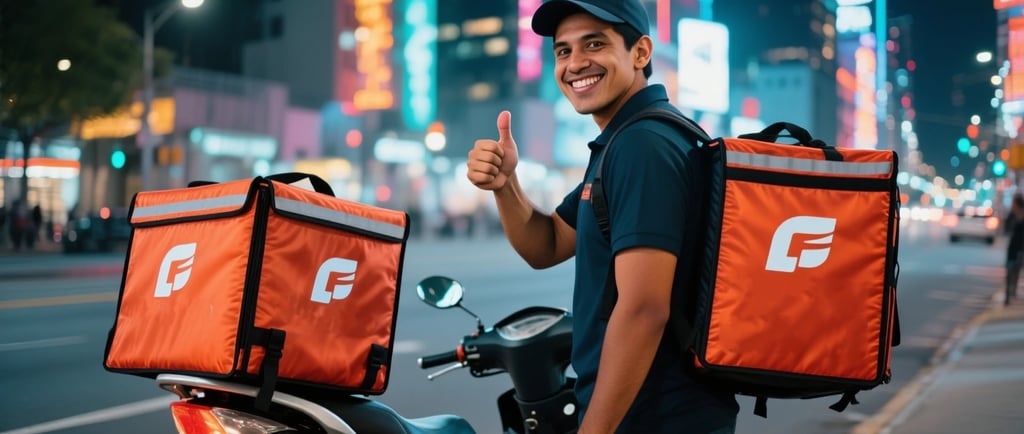
¡Hola, restauranteros! As a restaurant owner in Latin America, you know the struggle: a customer receives their favorite tacos or arepas cold, and suddenly, your hard-earned reputation is on the line. In a region where warmth is synonymous with hospitality, serving cold food is simply not an option. But what if you could ensure your dishes arrive as hot as they left your kitchen—even after a 4-hour delivery? The secret lies in understanding the science of thermal insulation. Let’s break it down in simple terms!
Why Does Food Lose Heat? The Basics
Heat always moves from warmer areas to cooler ones—a fundamental rule of thermodynamics. During delivery, heat escapes through three main ways:
Conduction: Heat transfers through direct contact (e.g., a hot container touching a cooler surface).
Convection: Air currents carry heat away (e.g., wind during a motorcycle delivery).
Radiation: Infrared waves emit heat into the environment (e.g., sunlight or humid air absorbing warmth).
Without protection, a dish can lose 50% of its heat in just 30 minutes!
.
The “Magic” of Thermal Insulation: Trapping Heat
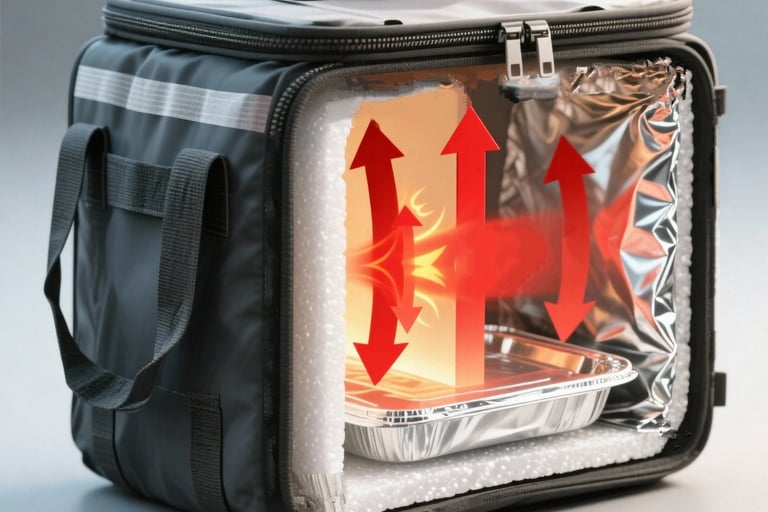
Insulation works by slowing down heat transfer. Think of it as putting a warm blanket around your food. Here’s how:
Air Is the Hero: Materials like foam or bubble wrap contain tiny pockets of air, which is a poor conductor of heat. This creates a barrier that keeps warmth inside
.
Layers Matter: Multi-layer insulation (e.g., aluminum foil + foam) reflects heat back into the food while blocking external cold.
Key Materials for Maximum Warmth
Not all insulation is equal. For Latin America’s humid climate, consider these materials:
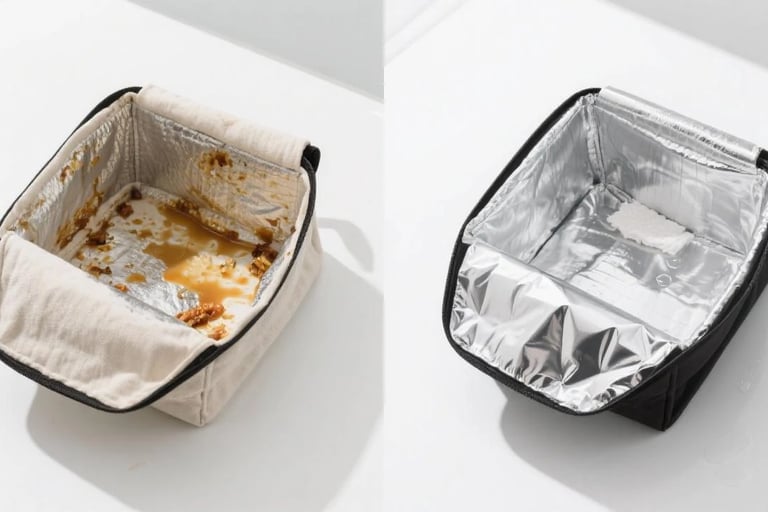
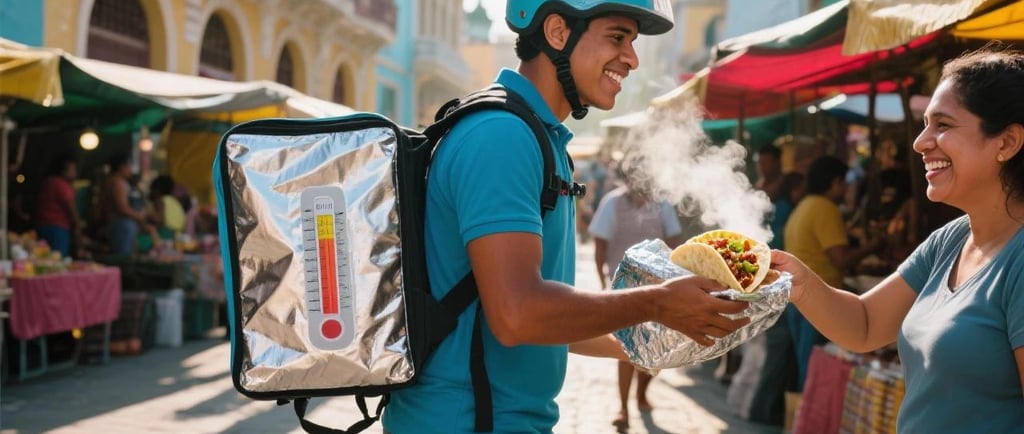
Aluminum Foil Liners: Reflects heat like a mirror and resists moisture. Perfect for tacos or arepas.
Foam Layers (e.g., PE Foam): Lightweight yet effective, withstanding heat up to 80°C. Ideal for empanadas or rice dishes.
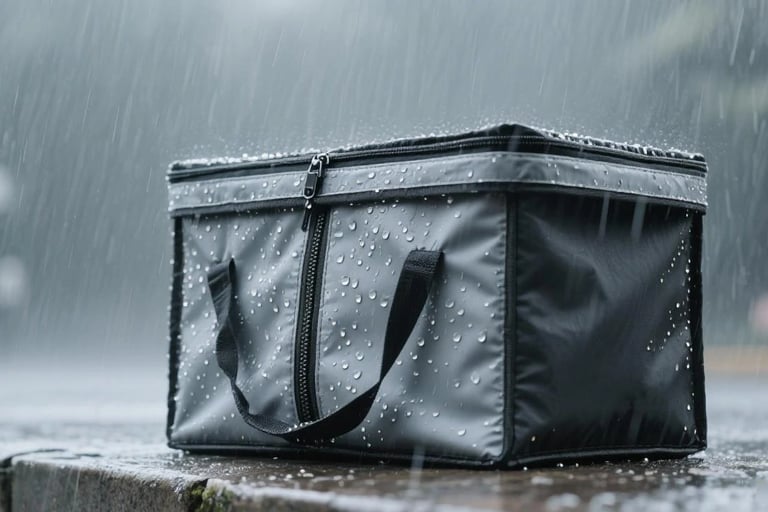
Waterproof Zippers: Prevent humid air from sneaking in and cooling the food
Why 4+ Hours? The Numbers Don’t Lie
When designed right, insulation can maintain temperatures above 60°C for hours. Here’s how:
Ideal Temperature Zone: Food safety standards require dishes to stay above 60°C to prevent bacterial growth
.
Real-World Test: In Mexico City, a taco stand using professional thermal bags recorded a mere 5°C temperature drop after 4 hours in 35°C weather
.
Tips for Latin American Restaurants
Match Packaging to Your Dish:
Tacos/Arepas: Use foil-lined bags to lock in heat.
Soups/Stews: Opt for leak-proof containers with thick foam walls.
Pre-Heat Your Containers: A simple trick—rinse delivery boxes with hot water before packing—to add extra warmth.
Train Delivery Riders: Encourage riders to minimize bag openings during stops
.
Conclusion: Turn Warm Meals into Happy Customers
In the competitive food industry of Latin America, temperature is more than a detail—it’s a promise of quality. By leveraging insulation science, you can ensure every customer experiences the same warmth and flavor they’d enjoy in your restaurant.
Ready to Elevate Your Delivery Game?
Explore our Professional Thermal Delivery Bags—engineered for Latin America’s heat, humidity, and vibrant cuisine. Download our Free Insulation Guide or request a sample!
Contact
GET OUR HELP
EMAIL FOR NEWSLETTER
+86-133-662-9400
© 2026. All Rights Reserved.
615, 6/F, 1377 Jianlan Rd., High-tech Zone, Ningbo, P. R. China.
Quick links
Business Hours
Reach out for inquiries and customer support.
Leagal
Monday - Friday
9:00 AM - 5:00 PM (CST UTC+8)